

Let’s have some fun by considering whether Fermat’s last theorem holds in the natural ring of ordinals. What do you think? I expect that you have probably heard of Fermat’s last theorem—the famous result that there is no nontrivial solution in the integers of
when the exponent n is larger than 2. For example, there is no nontrivial solution in the integers of a3 + b3 = c3 and no nontrivial solution of a4 + b4 = c4. By nontrivial, we just mean that the numbers a, b, c are all nonzero, since we don’t want to count. 23 + 03 = 23 as a counterexample instance.
The theorem is named for Pierre de Fermat, who in 1637 scribbled a note claiming the result in the margin of book, saying that he had found a truly wonderful proof, but alas, the margin was too small to contain it.
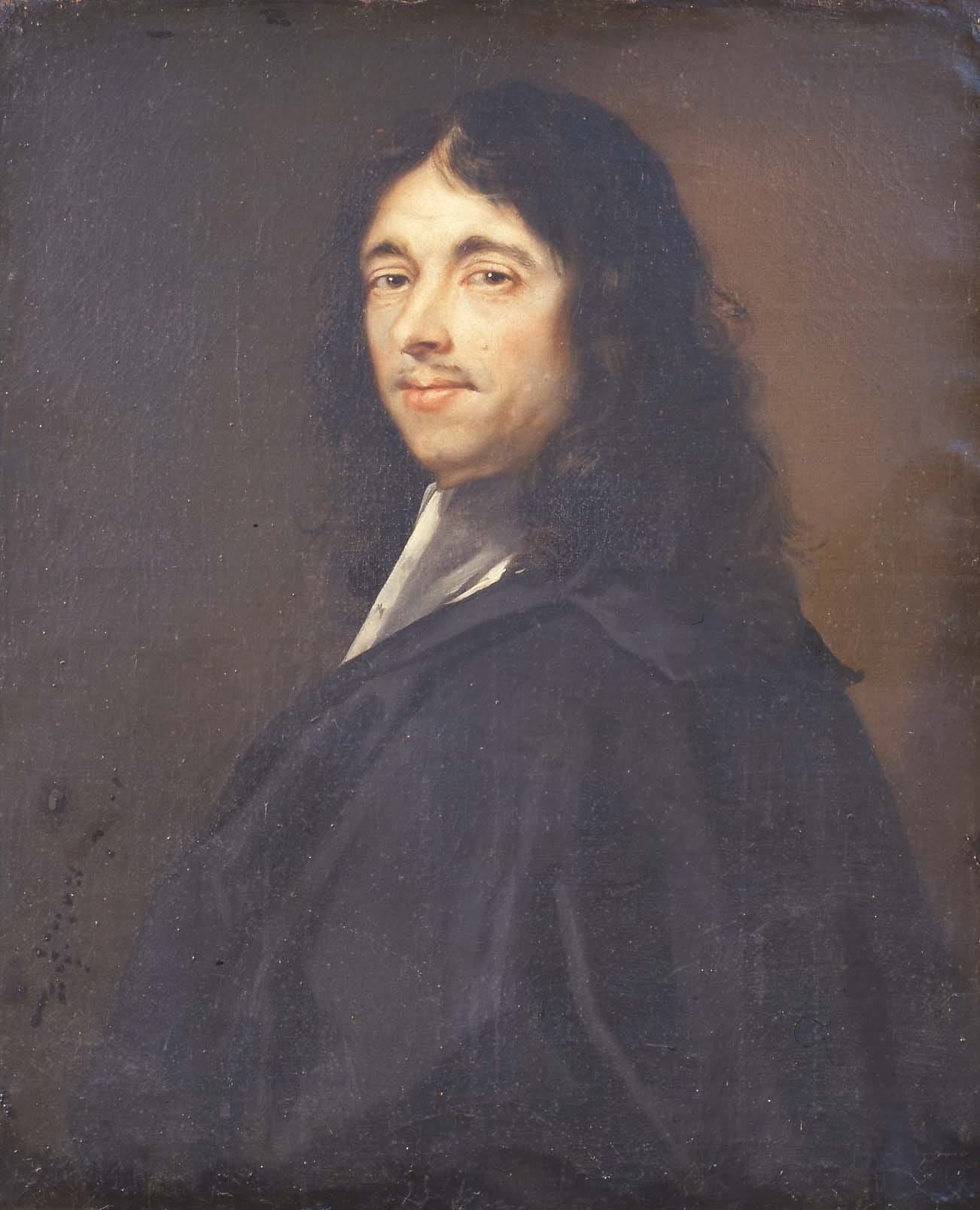
Mathematicians spent centuries since that time struggling to find the missing proof, or indeed any proof at all, always failing, until finally Andrew Wiles proved the theorem in 1994. Wiles’s argument uses sophisticated contemporary ideas—almost surely not what Fermat had in mind. Indeed, many mathematicians believe that Fermat was probably mistaken about having a proof of the general result in the first place.
I propose that we should consider the question of Fermat’s last theorem in the natural ring of ordinals. Namely, are there nonzero numbers a, b, and c in the natural ring of ordinals ⟨Ord⟩ that solve
for an integer exponent n > 2? What do you think?
Think about it...
Welcome to this essay on Fermat’s last theorem in the natural ring of ordinals, continuing a series of essays on the ordinals and specifically on the natural ring of ordinals. Find them in the ordinals tag.
Let’s get into it!
